All Categories
Featured
How To Recognize Red Flags With Virginia Solar Panel Inst...
Save Money With Reliable Pennsylvania Solar Panel Install...
When You Desire To Claim The 30% Federal Incentive For So...
Making An Informed Choice With Pennsylvania Solar Panel I...

Making An Educated Decision With Washington DC Solar Panel Installation Companies
Table of Contents
- – Top Washington DC Solar Panel Installation Comp...
- – Does The $330–$360 Per MWh SREC Price Alter Ho...
- – Benchmarking Washington DC Solar Panel Install...
- – What Specifics Matter About The 25–30 Year Pan...
- – Examining Your Solar Panel Installation Quote:...
- – Why Service Capacity Matters Most When You Pic...
Top Washington DC Solar Panel Installation Companies For Your Home Project
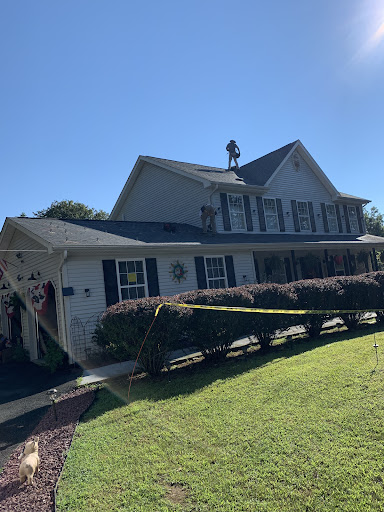
When you begin researching Washington DC Solar Panel Installation Companies, you are essentially commencing a long-term financial strategy to offset your utility expenses through localized energy generation. Because a standard 9.63 kW system necessitates a substantial upfront investment typically ranging from $24,828 to $33,590, understanding the technological and financial variables is essential to ensuring your project remains economically viable. You must navigate complex factors such as grid grid connection, the specific value of a Renewable Energy Certificate, and the long-term implications of your roof eligibility. By meticulously evaluating how different installers approach these mechanical and regulatory requirements, you can distinguish between providers who offer genuine value and those who simply aim for a quick sale. This article provides the analytical framework you need to evaluate your options and obtain a high-performance system that functions reliably for its 25 to 30-year operational lifespan.
“Make the most of your solar installation with great incentives and expert service from the Lumina Solar team.” — Lumina Solar
Does The $330–$360 Per MWh SREC Price Alter How You Choose A Washington DC Solar Panel Installation Business?
The $330–$360 per MWh SREC price represents a primary financial driver that influences how you assess the projected return on investment when selecting among Washington DC Solar Panel Installation Companies. Because these credits provide a recurring income stream for every megawatt-hour your system produces, they function as a performance-based subsidy that effectively reduces your long-term cost of ownership beyond simple electricity bill savings.
“The DC Sustainable Energy Utility (DCSEU) is the group tasked with implementing Solar for All's single-family solar program as well as its community solar site development.” — veic.org
Beyond these market-based credits, your financial strategy should integrate several structural mechanisms designed to enhance the viability of your project:
- Net Metering: This policy allows you to export surplus electricity to the grid at the full retail rate, essentially using the utility infrastructure as a virtual battery to offset your consumption during nighttime hours.
- Solar For All Program: This initiative provides targeted financial support for income-eligible residents to ensure equitable access to the advantages of localized energy generation.
- Federal tax considerations: It is crucial to note that the federal residential solar tax credit no longer applies to systems installed after December 31, 2025, meaning you must account for this expiration into your immediate project timeline.
When you confer with an installer, ask them to provide a detailed forecast of your expected annual SREC income based on your system’s estimated production capability rather than relying on generic estimates. Before finalizing your contract, verify that your chosen contractor has a established management process for enrolling your system with the appropriate tracking registries to ensure you start receiving these payments without interruption.
When planning a solar setup, you must first confirm your roof assessment to ensure the structure can sustain a system with a 25 to 30 year lifespan, as this physical foundation dictates your long-term efficiency. To explore the typical $24,828 to $33,590 cost range, you should contact a reputable Solar Panel Installation to compare your offer against the average $3.00 to $3.40 per watt industry benchmark while accounting for the $7,000 to $18,000 added price of battery backup. Because your cost recovery period is heavily influenced by leveraging the Solar Credit market and local NEM, you must verify that your chosen contractor maintains proper certification and provides a thorough installation warranty to protect your grid hookup and long-term financial returns.
Benchmarking Washington DC Solar Panel Installation Companies Through Their Warranty Terms
Washington DC solar panel installation companies reviewed and compared through the lens of warranty coverage offer a vital layer of financial protection for your investment. Because a superior solar setup is intended to function for 25 to 30 years, you must distinguish between the two primary types of protection: The manufacturer’s performance guarantee and the installer’s work guarantee.
Manufacturer efficiency guarantees typically include the hardware itself, guaranteeing the modules produce a specific percentage of their rated power over a 25-year period. In contrast, a labor warranty protects you against flaws resulting from the setup procedure, such as roof penetrations, mounting failures, or wiring errors. When evaluating an solar company, check the following protection components:
| Warranty Type | Typical Coverage Duration | Primary Purpose |
|---|---|---|
| Manufacturer Performance | 25 Years | Hardware deterioration and power yield |
| Workmanship | Varies by Installer | Work, mounting, and structural soundness |
| Price-Match Guarantee | At Contract Signing | Affordable rates for identical scopes |
Some installers differentiate themselves by offering price-match guarantees, which require you to provide a comparable written estimate from a competitor to initiate a price adjustment. Always ensure that the work guarantee is clearly defined in your contract, as this document determines your remedy if the system needs repairs due to incorrect mounting or defective electrical connections soon after the installation is complete.
Ask for a copy of the vendor's installation warranty document to confirm the exact duration and particular conditions under which labor costs for repairs are insured.
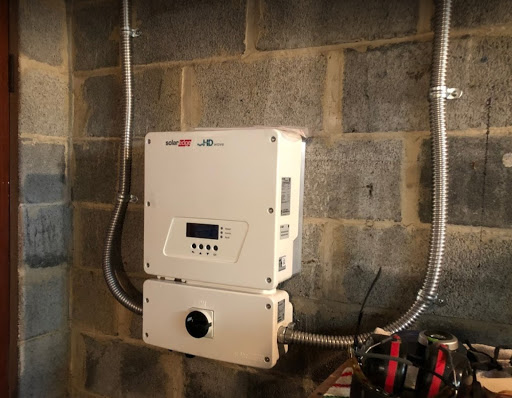
What Specifics Matter About The 25–30 Year Panel Lifespan For Your Washington DC Solar Panel Installation?
The 25–30 year panel lifespan represents the resilient operational window during which your hardware remains efficient enough to warrant the initial investment. When you assess Washington DC companies specializing in solar panel installation, you are looking for long-term performance stability that ensures your system continues to generate electricity effectively as it ages. Over these decades, the panels act as a hedge against the inevitable inflation of utility rates while simultaneously generating steady revenue through each Renewable Energy Certificate earned by your system.
“A Berkeley Lab survey of U.S. solar industry professionals shows that the average operational lifespan of a solar panel has increased from around 20 years in 2007 to 25-35 years in 2025.” — facebook.com
While the hardware is engineered for longevity, its actual output will slowly decline due to environmental exposure and internal component degradation. Grasping how your system performance changes over this duration is crucial for forecasting your long-term financial returns:
- Years 1–10: Peak performance period where panels typically operate at or near their original rated capacity.
- Years 11–20: Gradual efficiency drop-off, typically occurring at a pace of 0.5% to 0.8% annually as silicon cells undergo natural wear.
- Years 21–30: Stabilization phase where the system continues to produce meaningful power, though output may remain at 80% to 85% of its initial nameplate rating.
Review the precise degradation rate documentation provided by the manufacturer in your proposal to understand precisely how much energy output you can expect as your system approaches the end of its 30-year functional life.
Examining Your Solar Panel Installation Quote: Why You Should Secure 3 Quotes Minimum Recommended
A 3 quotes minimum recommended approach ensures you comprehend exactly what you are paying for when evaluating the top solar system installation companies in Washington DC. Obtaining several documents enables you to verify that every cost, from beginning site assessment to ultimate grid synchronization, is accounted for in the overall price.
“DC Code Section 29-943 limits condo association restrictions on solar installations — associations cannot effectively prohibit solar installations on owner-exclusive areas (rooftops).” — propertyzoned.com
When you evaluate a proposal, you must look for an detailed breakdown of administrative and technical tasks. Many homeowners fail to realize that the $29,209 midpoint cost can easily increase if these essential services are treated as add-ons rather than inclusive line items. You should verify that your documentation explicitly addresses the following requirements:
- Licensing fees and municipal inspection costs
- Utility grid connection submission and administrative processing
- Solar Credit registration support
- Post-installation support and performance monitoring setup
- Construction engineering assessments for roof eligibility
The following table illustrates how these components usually affect your financial planning when you compare different service tiers:
| Service Component | Financial Impact |
|---|---|
| Permitting & Inspection Fees | Typically $500–$1,500 |
| Utility Interconnection Filing | Frequently grouped, but can be a distinct $300 fee |
| Solar Credit Enrollment | Crucial for long-term income; verify as included |
| Aftercare & System Maintenance | Guarantees 25 to 30 years of functional health |
Compare the detailed line items across your three quotes to ensure no concealed fees exist for the administrative obstacles required to bring your system online.
Why Service Capacity Matters Most When You Pick A Washington DC Solar Panel Installation Company
Service capacity is the degree to which an solar company maintains dedicated, local field crews to manage ongoing system performance throughout the 25 to 30 year operational lifespan of your equipment. When you emphasize Finding a reliable solar panel installation company in Washington DC, you must differentiate between firms that manage their own technicians and those that rely on third-party, outsourced labor. Because your system requires periodic monitoring and possible repairs to maintain its efficiency, the proximity of your provider’s workforce directly determines how quickly your energy production is restored following a technical failure.
“DOB is dedicated to completing Solar Plan Reviews within 10 business days.” — dob.dc.gov
Consider the following operational differences when evaluating the service infrastructure of your prospective provider:
| Service Factor | Local In-House Crew | Outsourced/Distant Labor |
|---|---|---|
| Response Time | Usually 24 to 48 hours for priority service | Often delayed by travel or scheduling logistics |
| Technical Familiarity | High; crews know your specific grid hookup | Variable; engineers may miss system history |
| Accountability | Personally supervised by the main installer | Often fragmented between firm and subcontractor |
Reliance on centralized, far-off labor often leads to significant wait times for routine maintenance or system restarts, which directly affects your capacity to produce Solar Credit income. By ensuring your solar company hires local staff, you lessen the risk of prolonged downtime during the critical 25 to 30 year window of system efficiency.
Ask potential installers to provide a physical address for their closest service hub and ask for a written policy concerning their maximum response time for emergency service calls.

Table of Contents
- – Top Washington DC Solar Panel Installation Comp...
- – Does The $330–$360 Per MWh SREC Price Alter Ho...
- – Benchmarking Washington DC Solar Panel Install...
- – What Specifics Matter About The 25–30 Year Pan...
- – Examining Your Solar Panel Installation Quote:...
- – Why Service Capacity Matters Most When You Pic...
Latest Posts
How To Recognize Red Flags With Virginia Solar Panel Installation Companies
Save Money With Reliable Pennsylvania Solar Panel Installation Companies
When You Desire To Claim The 30% Federal Incentive For Solar Setup
More
Latest Posts
How To Recognize Red Flags With Virginia Solar Panel Installation Companies
Save Money With Reliable Pennsylvania Solar Panel Installation Companies
When You Desire To Claim The 30% Federal Incentive For Solar Setup